
The best hunting setup is not automatically the most expensive, elaborate or familiar. It is the arrangement that matches the day: wind, ground, visibility, access, season rules and your ability to use equipment safely. Good preparation reduces rushed choices and prevents small problems from becoming ethical or practical failures. Before leaving home, read the conditions as carefully as you inspect your gear, then choose only what the situation supports.
Start with the conditions, not the kit
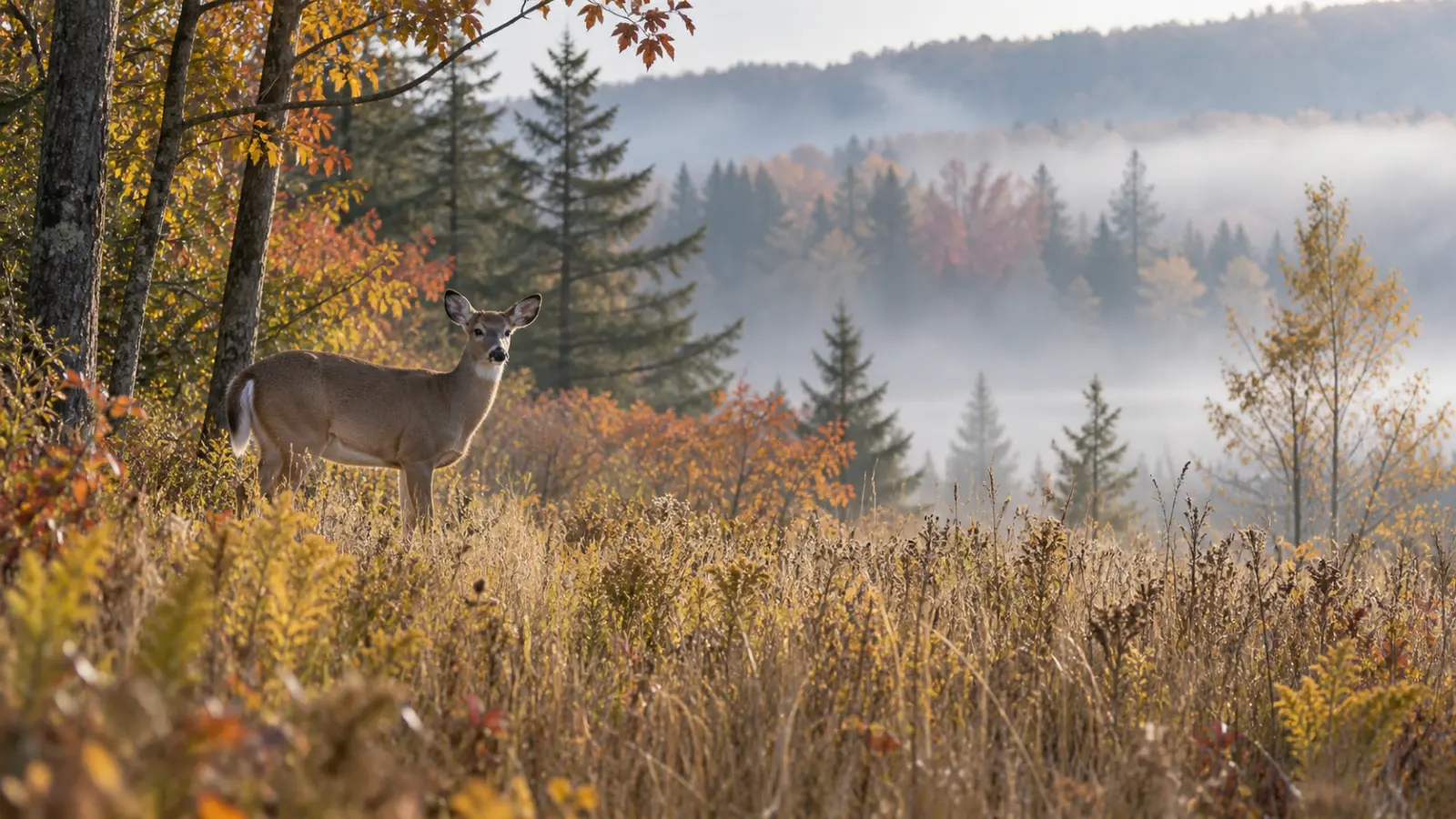
Weather forecasts are useful, but they are not the whole picture. Wind can shift around ridges, timber edges and steep draws. Rain can soften trails, carry scent across a slope and make an easy route noisy. Dry leaves, crusted snow and saturated ground each affect how quietly you can move and where your pressure will show.
Check the forecast close to departure, then compare it with conditions outside. Watch tree movement rather than relying only on an app. Consider whether fog, glare or falling precipitation will reduce visibility. If conditions are changing quickly, choose a setup that allows a clear, safe exit instead of one that depends on the weather remaining steady.
Temperature also matters. Cold can reduce dexterity, drain batteries and change how clothing layers fit. Heat and humidity increase fatigue and make water planning more important. Difficult conditions are not necessarily a reason to stay home, but they may indicate that your original plan needs simplifying.
Let terrain and access narrow the choice
A promising area is not necessarily a sensible place to sit, glass or travel through. Start with the route in and the route out. If reaching a position requires unstable ground, thick cover or movement near other likely users, reconsider before committing. An approach that leaves you hurried or noisy has already weakened the plan.
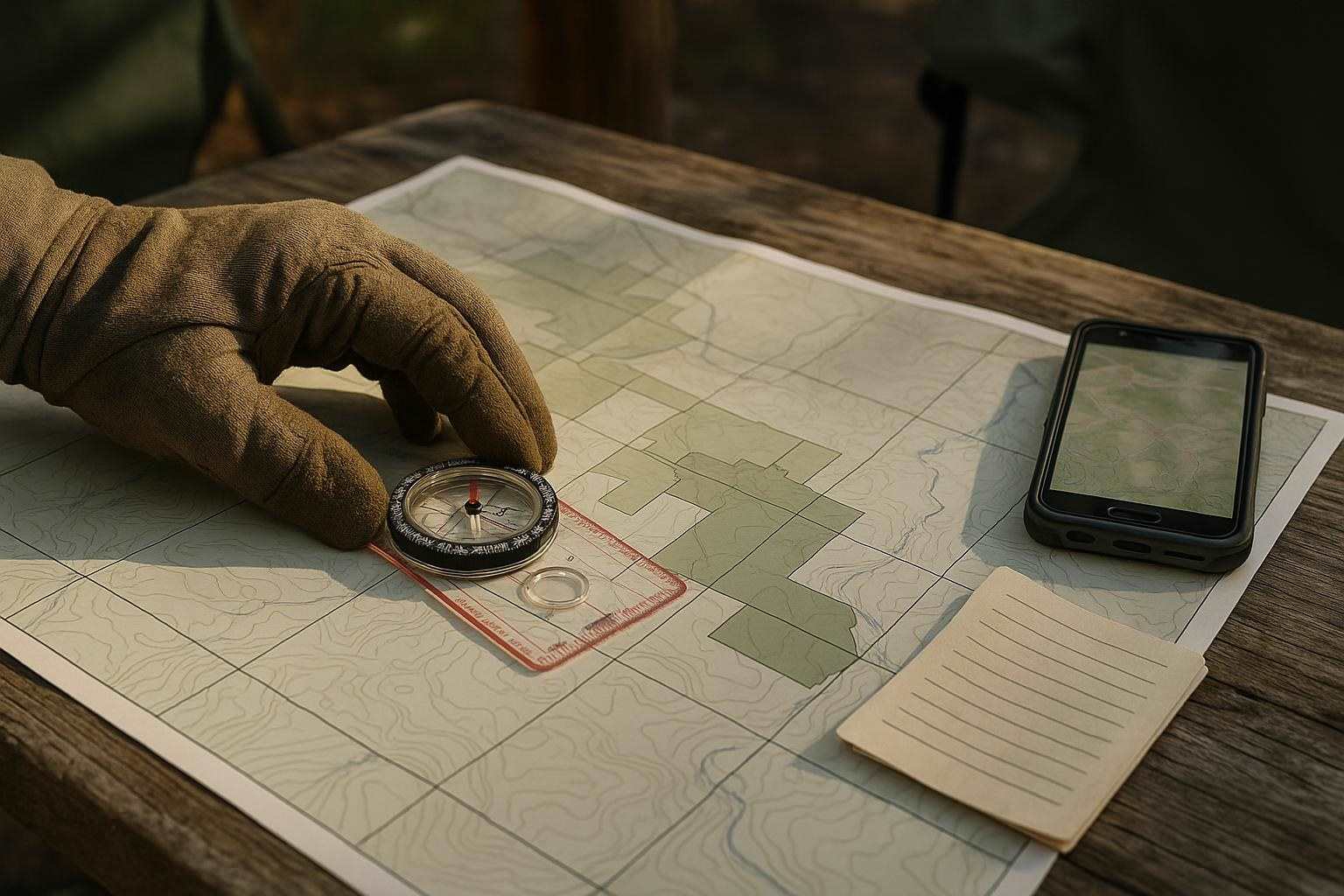
Terrain changes what can be seen, heard and safely identified. Ridges, folds, timber and tall vegetation create blind areas. Do not treat a map line or familiar landmark as proof that visibility will be adequate on the ground. During legal scouting opportunities, walk the route, identify backstops and safe fields of awareness, and consider how the landscape may look in darkness or poor weather.
Look for fresh changes such as blocked trails, new fencing, high water, fallen trees or recent forestry work. These can redirect people and animals and may affect access permissions. A quiet alternative that can be reached without crossing uncertain ground is often more useful than an ideal position that depends on perfect timing.
Use simple symptoms to catch gear problems
Equipment failures rarely begin dramatically. A damp optic, loose strap, stiff zipper, cracked buckle, weak battery or uncomfortable boot may seem minor at home. In the field, each can distract you, compromise judgment or encourage an unsafe shortcut.
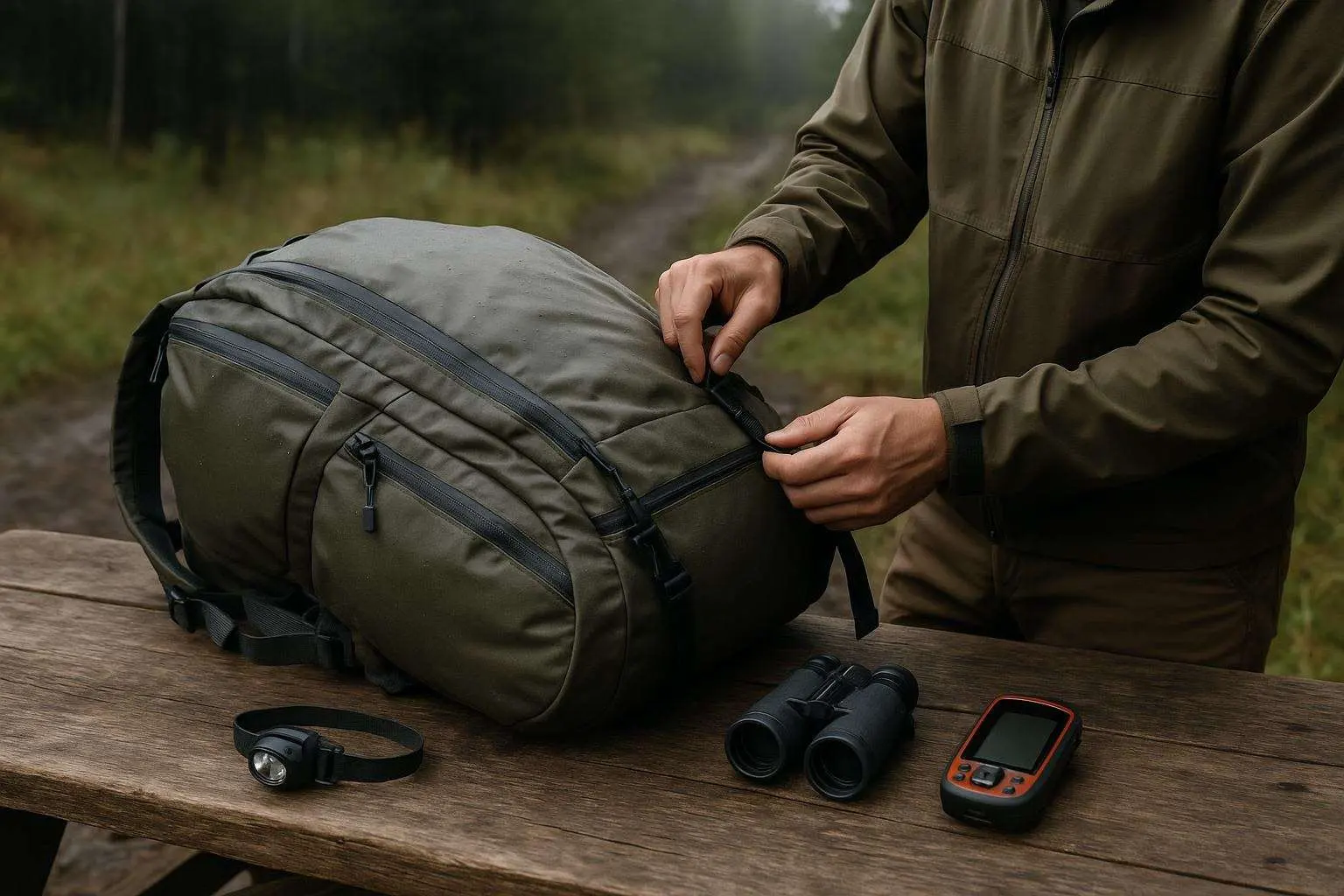
Handle the gear you expect to use, not just what you remember packing. Check closures, lenses, fasteners and layered clothing. Inspect footwear for worn soles and damaged waterproofing. Look inside packs for leaking containers, compressed insulation or food and water left out of the plan.
Anything affecting safe identification, communication, navigation or a controlled return deserves prompt attention. Do not ignore recurring fogging, a shifting mount, a flickering headlamp or a navigation device that unexpectedly loses power. Repair, replace or remove the item from the plan. Carrying a known weak point because it worked once is deferred trouble, not maintenance.
A useful pre-departure check is short:
– Confirm current season dates, permitted methods, tagging requirements and land-access rules.
– Match clothing and footwear to the forecast, ground conditions and expected duration.
– Test navigation, communication and lighting equipment, including backup power.
– Inspect the setup for loose, damaged or wet components.
– Tell a responsible person where you are going and when you expect to return.
– Reconsider the plan if visibility, access or physical condition makes a safe return uncertain.
Keep legality and ethics in the same decision
Regulations are part of preparation, not paperwork to handle afterward. Seasons, legal methods, reporting requirements, access restrictions and species-specific rules can change. Requirements may also differ between public and private land or between jurisdictions. Check current official guidance before each season and whenever conditions, location or target species change.
A legal opportunity is not automatically an ethical one. Ask whether visibility is sufficient for positive identification, whether the angle and background allow a responsible decision, and whether you have a realistic plan for tracking and recovering an animal. If the answer is uncertain, pass. Patience is a practical hunting skill, not a failure to act.
Respect also includes nearby people and habitat. Avoid crowding other hunters, crossing boundaries without permission or damaging sensitive vegetation when an alternate route exists. Control noise and waste, and leave gates, campsites and access points as you found them. Conservation is expressed through these ordinary choices as much as through formal habitat projects.
Reassess when the field changes
A setup is a starting decision, not a promise. Wind may reverse, visibility may close in, an access route may become unsafe or another group may appear nearby. Watch for those changes before they become urgent. If conditions no longer support a clear and ethical choice, move only when it is safe, shorten the outing or leave.
Afterward, note what failed and what proved unnecessary. Did clothing trap moisture? Was the route too exposed? Was a small repair postponed until it mattered? A few honest observations improve the next plan more than adding another piece of gear.
Simple hunting preparation does not remove uncertainty. It helps you recognize problems early, check the details that matter and refuse to let pressure make the decision. That approach protects safety, respects regulations and leaves more room for the stewardship that keeps wild places worth returning to.