
Essential Boundaries, in Hunting Plans
In hunting knowing where property lines are isn't just polite-it's vital for safety and for maintaining relationships with landowners. A phone map might show you can hunt in a spot. That doesn't always tell the full story. Property lines can be unclear. Permissions may be missing. Land is often a mix of areas and restricted zones. That's why checking boundaries carefully is key. It helps you know where you can go-. What to do if your map doesn't match what's actually on the ground.
Maps as Guides, Not Authorities
Digital maps are helpful for planning.. They're not the word when it comes to who owns the land or who can enter it. Online maps can be outdated. They might hide property lines. It's easy to think you're in an area when you're not. Before your hunt check sources. Use up-to-date public land maps. Look at wildlife agency publications. Get permission from landowners.
It's smart to have this information offline. Your internet might drop when you're out in the field. That leaves you without direction. Don't assume boundaries are perfectly clear on your screen. Nature changes-rivers shift fences don't always match maps and roads might show access but not ownership. When you're near these edges play it safe. If you're unsure avoid the border entirely.
Confirming Access is Key
Knowing who owns the land is part of the job. The next step is making sure you're allowed to be for hunting or related activities. Before the season starts ask the questions: Can you hunt? What animals are in season? Are there time limits? Does permission cover people? Knowing if you can bring a guest or where to park helps you plan better.
If someone gives you permission write it down. Double-check your understanding especially if things change-like the start of a season. Also remember that public land rules can differ by area, season or even the type of firearm you use. Always check for updated hunting rules before each trip. A map from year won't work for this year's rules.
Pre-season Checks: Walk the Boundaries Wisely
A plan includes visiting your hunting area before the season starts. This lets you spot problems like gates that are broken, washed-out trails or livestock. The goal is to gather info without disturbing the land.
When scouting, stick to existing paths. Don't cut through mud or jump fences-that can hurt the environment. If boundaries are unclear write down what you see and stay cautious. Taking a detour is better than running into trouble or harming the land you want to protect.
Create a Reliable Offline Navigation System
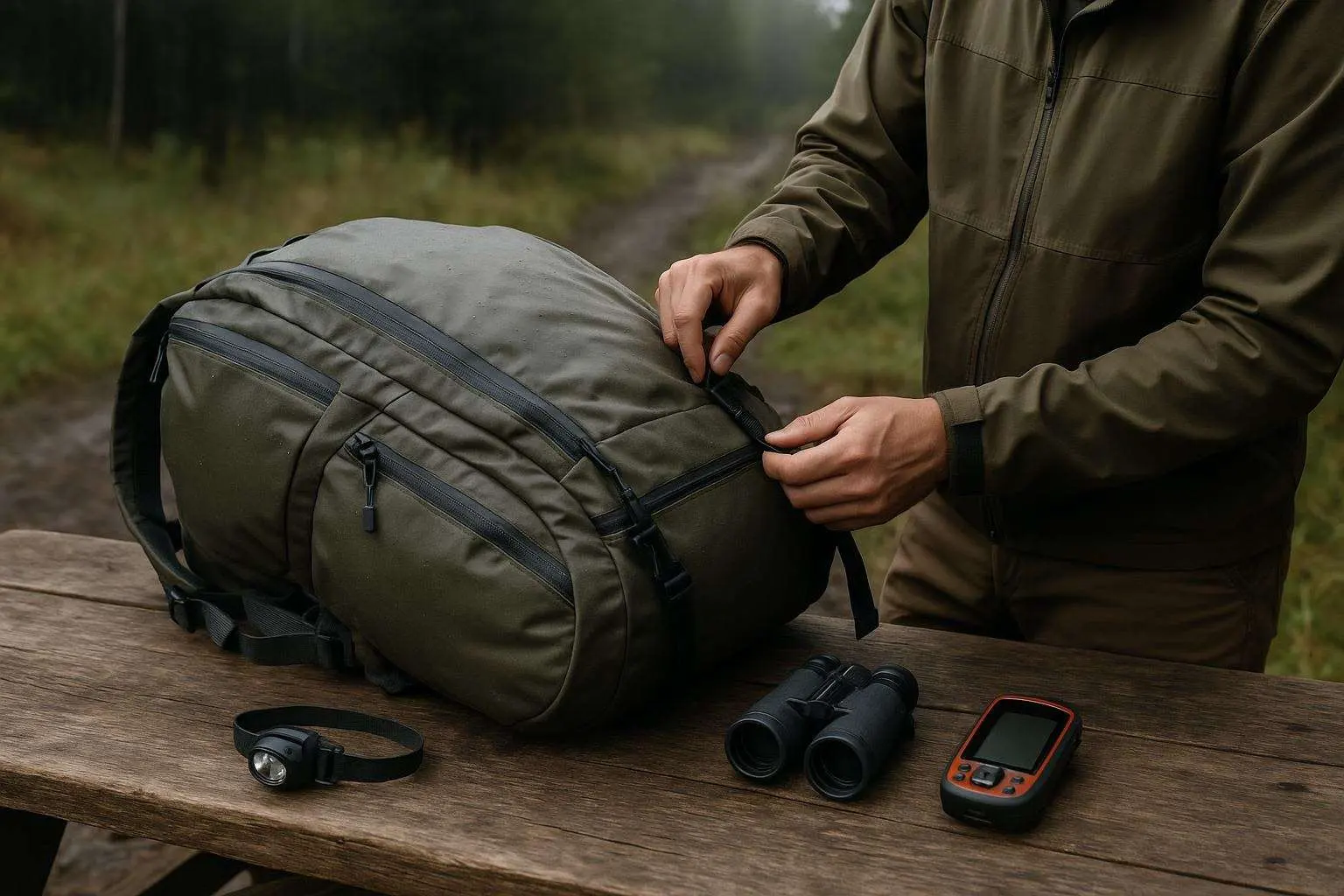
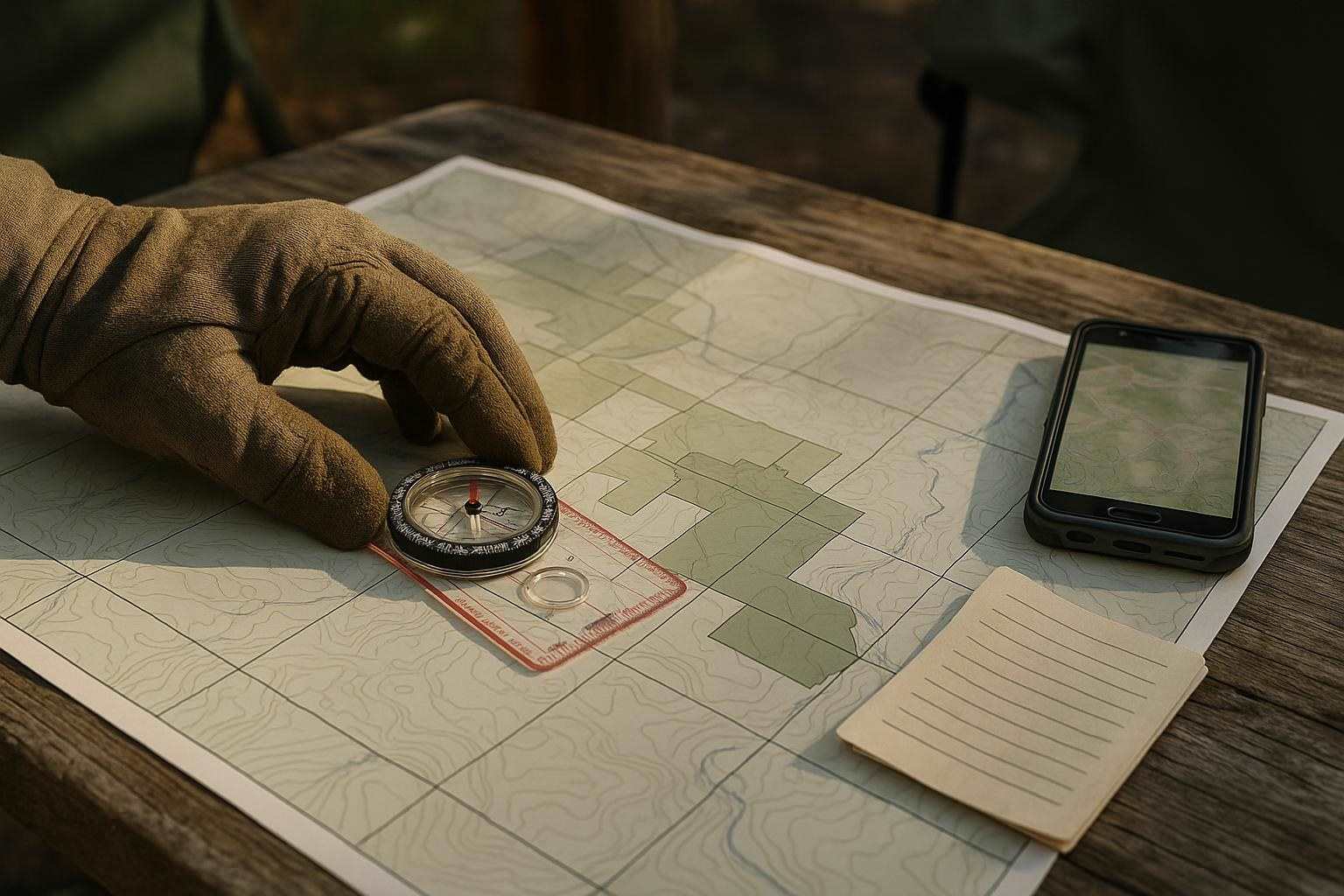
Your navigation tools should work in stress, bad weather or when your hands are cold. Download maps of your hunting area ahead of time so you can find your position without a signal. Bring a paper map and compass-know how to use them.
Mark spots on your map: parking areas, legal entry points and places where you might accidentally step onto land. Clearly show boundaries and note areas where you're unsure.
Before you go do these things:
– Check hunting rules, permits and access from sources.
– Confirm your permission, about parking and guests.
– Download all needed maps and test your GPS in airplane mode.
– Pack a paper map, compass, charged power bank, flashlight and basic first-aid kit.
– Tell someone you trust your parking plan route, expected return time and backup plans.
– Mark zones, boundaries and emergency exits on your maps.
When Facts Conflict, Choose Prudently
Sometimes your map and the real world don't match. Signs may be newer than your map. Landowners might say boundaries are different. Roads could be closed. These moments matter-don't treat them as problems.
Take time to figure out where you are and weigh the facts. If you're unsure don't enter areas. When possible call the land manager or permission holder for clarity. If doubts remain, pick a spot. It's never worth losing access for a chance. Seeing an animal move or a low battery shouldn't make you ignore a boundary.
Choosing the route today might mean options now but it builds trust with landowners and wildlife agencies. Respecting boundaries helps keep hunting privileges for the future.
Balancing Compliance and Conservation
Beyond staying legal checking boundaries helps protect nature. It limits foot traffic guards areas and can reveal problems-like trash dumping or habitat damage. Report what you find to the people who manage the land.. Don't draw attention to those sites.
In the end the goal isn't to make hunting. With rules confirmed, permission, in hand and navigation you can avoid problems. Enjoy your hunt more. Being prepared beats trusting a map alone.