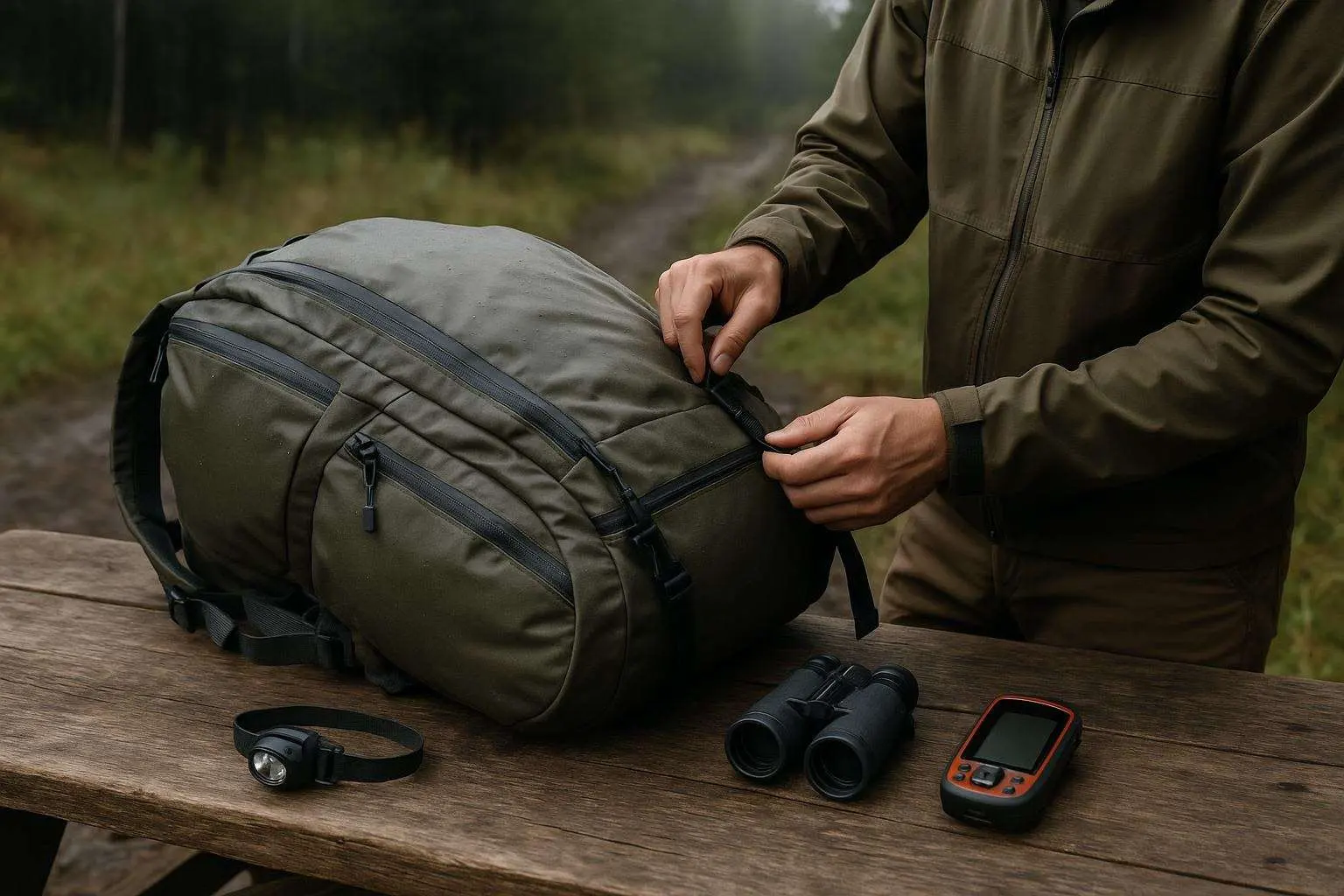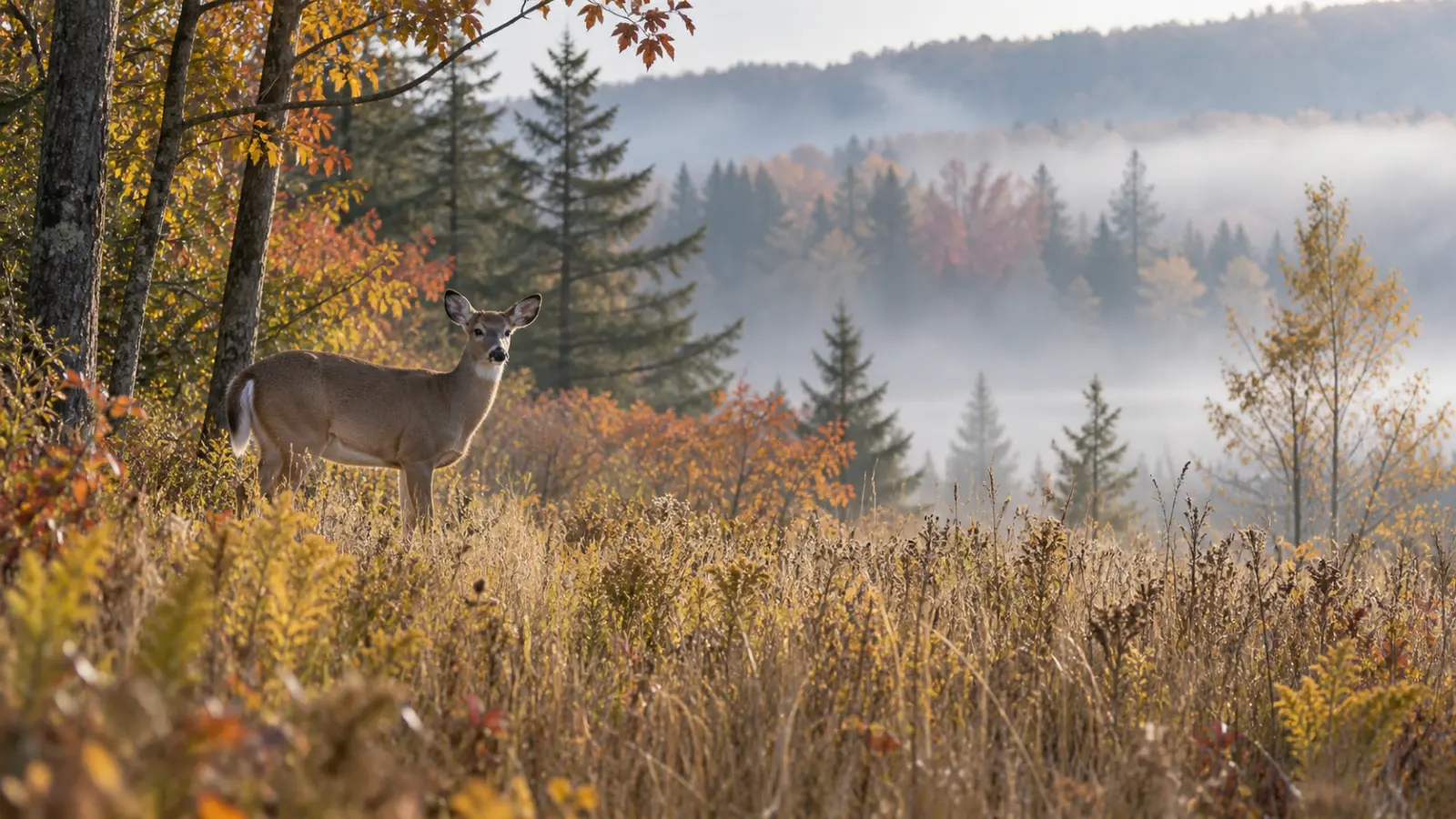

A story about hunting does not need a dramatic ending to be worth telling. Sometimes the thing that stays with a reader is a change in the light, a revised plan or the moment a group decided to go back. Those quieter parts of a day are easily forgotten when a story turns into a list of gear, distances and things achieved.
Writing a story starts with paying attention then being honest about what that attention can and cannot show. A quick look is not a sustained observation. A friend’s memory is not always your own. You can give a day a shape and feeling without adding certainty that wasn't there. The result is often more interesting because it leaves room for the feel of being outdoors.
Choose one question to notice
Trying to remember everything usually leads to a confusing set of pieces. Before going out choose one question that gives your attention something to come back to. You might notice how the character of a forest changes through the morning which sounds carry across an open field or how the group changes plans when conditions are different from what was expected.
This is not a reason to get so focused on writing that you ignore safety or the people around you. Observing should fit the trip. If you are using equipment moving over ground or listening to instructions give that activity your full attention. Later, in a safe place, reconstruct the details instead of trying to write everything as it happens.
A small question also stops the story from becoming an inventory. Instead of talking about every item you carried and every minute spent you have a thread to follow. The thread can change when something unexpected happens. It is a starting point for noticing, not a rule that the day must prove a conclusion you already had.
Separate what happened from what it seemed to mean
Think about the difference between seeing a deer stop at the edge of a forest and deciding why it stopped. The first is an observation. The second is an interpretation, which might be right but is still uncertain. An account is clearer when the writer makes the distinction rather than treating a possible explanation as a fact that the scene proved.
Use the difference with signs you find on the ground. You can describe how they looked and the conditions when you found them without saying more than you know about when or how they got there. If a person who knows more gave an explanation say that it was that person’s interpretation. Do not quietly turn advice given later into something you thought you understood at the time.
Not knowing doesn't have to make the writing awkward. Phrases such as “appeared to” and “we could not tell” are useful when they show a real limit. The goal is not to add a lot of qualifications to every sentence. It is to avoid giving a reader the wrong idea about how certain you are, especially when the observation was brief, distant or affected by bad light.
Keep observations from disturbing the subject
The need to get a picture can change how you act without you even realizing it. A step closer turns into several steps and soon the animal’s reaction is part of a scene that the observer helped create. Record what you can from a safe viewing position. If getting detail would interfere with the animal let the story keep that missing detail.
The U.S. Fish and Wildlife Service gives advice about keeping distance and not disturbing behavior. Their advice for hunters and others who visit these places also says that wildlife refuges accommodate different activities. Check the rules for the exact place, including any limits on access and instructions from staff. A writing project does not change those rules.
Describe an observation within its limits. If the animal was too far to be sure of what it was a careful description is better than an unsupported species name. Also avoid saying a close photo proves the photographer stood nearby if the picture was taken with a long lens. The reader should know the situation not just be impressed by the picture.
Capture anchors rather than polished sentences
At a safe stop write down a few details that will help you remember the day: the general place, the weather as you felt it the main events and one or two things you might forget. A few notes or a short voice message can be enough. The first record does not need to sound like a story.
Good anchors are often specific but simple. A friend put on a layer during a break. The talk was hard to hear beside a loud stream. A familiar landmark was harder to see from the opposite direction. These details make the story real without needing an extraordinary event. They also help you check when memory starts making the day seem simpler.
Be careful when writing about others. Ask before you record a conversation and don't think a casual comment is free to use. If you want to use someone’s words make sure of the exact words and get permission. A remembered summary should be called a summary not placed in quotes like it was exactly said.
Use photographs as evidence with limits
Photos can help you remember what happened and show details you missed at the time. Keep the files and check them against your notes. Don't think every time on the photo is right: a camera might have the wrong time. If the exact time matters explain the uncertainty instead of making a neat but wrong timeline.
Choose pictures that match the event you're describing. If you use a generated illustration, drawing or photograph from another time, label it clearly. A nice picture should not quietly add weather, animals or people that weren't there on the trip. The same rule applies to editing that changes how the scene looks.
Before sharing check the picture for things you didn't mean to show. An address sign, a car number or a private gate might give away a place. Remove location info if needed and ask for permission from the people involved. A story can give a feeling of a place without showing private land or a protected wildlife spot.
Find the point without making up a lesson
After the facts are clear ask what the day changed for you or the group. Maybe a simple plan worked well. An idea was wrong. Sometimes the answer is just that a familiar place looked different in a season. That can be enough. There is no need to make every trip into a test of character.
Read the draft for any parts that got bigger during writing. Did a difficult moment become a crisis? Did a hard talk become a speech that no one gave? Take out the certainty and the fancy drama. A good story can have humor, sadness or a quiet ending and still be true to what the people remember.
Let others check the parts that involve them if it is possible. They may remember a part differently or want a personal detail left out. Disagreement doesn't always mean someone is not telling the truth; people notice different things. If the difference is important and can't be fixed say so or leave the part out instead of picking the version that makes a better story.
Leave the reader something specific
A helpful ending goes back to the question that started the story. It might explain what question is still not answered or what you would watch for next time. Avoid making one day’s experience into a rule about animals, weather or people. The specific thing you saw is often stronger than an idea it can't support.
Over time a collection of small stories is more valuable than a list of exaggerated adventures. You can see how your attention changes and what details keep coming up. Readers learn that they can trust the difference, between what you saw and what you only thought. That trust gives a quiet morning a reason to be remembered.